China to Canada DDP shipping can bring freight, customs clearance, import duties and delivery into one agreed plan. For Canadian buyers, that can make budgeting easier and reduce the number of shipping tasks to manage.
Before booking, however, check three things: what the price covers, who will act as importer of record, and where delivery ends. This guide explains the costs, documents and questions that matter.
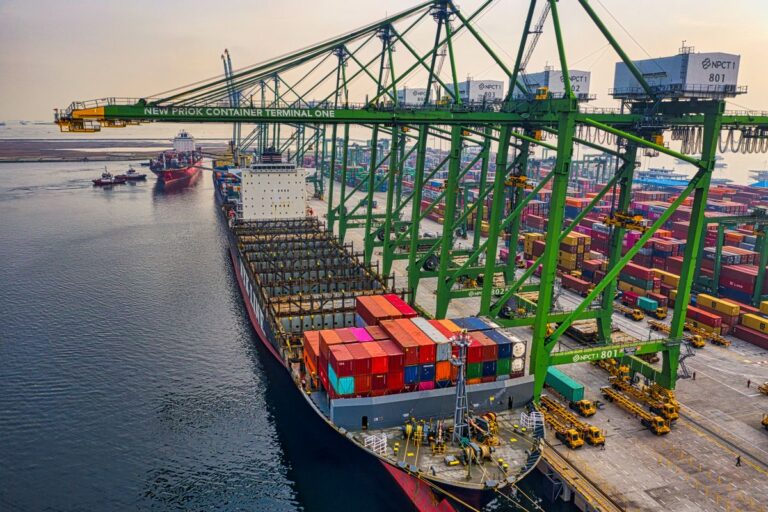
Cover photograph: Container ship at a port in Jakarta, Indonesia; illustrative stock photograph. Photo: Tom Fisk / Pexels.
What is China to Canada DDP shipping?
DDP means Delivered Duty Paid. Under Incoterms® 2020, the seller arranges transport and handles export and import clearance, including applicable import duties and taxes. Delivery occurs at the agreed destination, with the goods on the arriving vehicle, cleared for import and ready to unload. The seller carries the transport risk until that point.[1]
The buyer normally unloads the goods. Unloading costs can already be included in the seller’s transport contract, so confirm the arrangement. DDP also does not require the seller to buy cargo insurance for the buyer.[2]
A forwarding service and a sales term serve different purposes. A freight company may market a “DDP service,” but your purchase contract still determines the seller’s obligations. Match the freight quotation to that contract and identify the parties responsible for each step.
For example, specify the full Canadian delivery address and receiving point with “Incoterms® 2020.” A city name alone leaves room for disagreement about where the journey ends.[2]
What should a DDP shipping quote include?
Ask for a written breakdown before comparing prices. A useful China to Canada DDP shipping quote should explain how it covers:
- Origin handling: collection, warehouse handling and export clearance.
- International freight: the agreed sea or air service and route.
- Canadian clearance: brokerage and customs processing.
- Import charges: applicable duties and taxes, with their calculation basis.
- Destination handling: terminal charges and onward transport.
- Final delivery: the exact address and any agreed booking or access services.
Also ask how the provider handles inspections, storage, container delays, failed delivery and changes to cargo details. Identify any exclusions and who bears each charge. An exclusion that shifts a standard DDP responsibility needs explicit agreement; it should not disappear behind an “all-in” label.
Compare quotations using the same product details, weight, volume, delivery point and service scope. A lower headline price is hard to evaluate when those details differ.
Ready to compare a shipment-specific option? Ask TONCENT to confirm a DDP quote for your Canadian delivery address.

Canadian import duties and taxes: what to budget
Customs duty depends on the goods
There is no single duty rate for every shipment from China. Canada uses the product’s tariff classification, origin, applicable tariff treatment and value for duty to determine the amount. Confirm those details before accepting a tax estimate.[3]
Some goods also attract anti-dumping or countervailing duties under Canada’s Special Import Measures Act. Have the broker check whether your product falls within a measure in force.[4]
Surtaxes can also apply to certain steel and aluminium goods. Ask the broker to check current measures for your product before finalising the quote.[5]
GST and HST are not interchangeable border charges
Most taxable commercial imports attract 5% GST, or the federal part of HST. The tax base generally includes the Canadian-dollar value of the goods plus customs duty and applicable excise tax.[3][6]
The provincial part of HST is not collected at the border on commercial goods destined for a participating province. However, provincial HST self-assessment rules may apply. Do not simply apply a province’s full HST rate to every commercial import.[6]
Illustrative calculation: assume a value for duty of CAD 10,000, a hypothetical 5% customs duty rate, and no other applicable charges.
- Customs duty: CAD 10,000 × 5% = CAD 500.
- GST: (CAD 10,000 + CAD 500) × 5% = CAD 525.
- Combined duty and GST: CAD 1,025.
This shows the calculation method, not a tariff rate for your product or a freight quotation.[3]
Confirm who can claim an input tax credit
A GST/HST-registered importer may qualify to recover import tax through an input tax credit, subject to CRA requirements. A “tax included” shipping invoice does not automatically establish that entitlement. Agree who imports the goods and what supporting records your accountant will receive.[6]
Who is the importer of record, and is CARM required?
The importer of record is the party identified on the customs accounting declaration. It has ongoing duties, including records, corrections and payment. Hiring a broker does not automatically remove an importer’s accountability.[7]
CBSA’s commercial-import guidance requires importers to have a business number, an import program account and registration in the CARM Client Portal. If your business is the importer, arrange those accounts and delegate authority to your broker.[7]
If the seller proposes to import as a non-resident importer, confirm its registration and legal role. CBSA directs non-resident importers to obtain a business number from CRA before registering in CARM.[7]
Ask before dispatch: whose legal name and business number will appear on the declaration, and who will retain the customs records? DDP does not, by itself, answer either question.
Release Prior to Payment (RPP) allows eligible importers to obtain release before paying duties and taxes. It requires enrolment and financial security. Alternatively, CBSA provides a route for release after full accounting and payment; RPP is not mandatory for every import.[8]
Documents to prepare before shipping
Give your provider accurate information early. Use this checklist to assemble the shipment file:
- Commercial invoice: seller, buyer, clear product descriptions, quantities, values, currency and origin information.
- Packing list: carton count, contents, dimensions, gross weight and pallet details.
- Transport documents: coordinate the bill of lading or air waybill with the forwarder.
- Customs information: importer details, tariff classification, valuation support and origin evidence.
- Product approvals: any permits, certificates or other documents the relevant Canadian authority requires.
- Delivery instructions: postal code, receiving hours, contact details and appointment or access requirements.
The exact customs package depends on the goods and release method. CBSA requires detailed product, value, origin and classification information. Some goods also need approval from other government departments.[8][4]
Use precise descriptions such as “cotton knitted T-shirts” instead of “samples” or “general goods.” Accurate details help the provider identify the right questions before the cargo leaves China.
DDP vs DAP for Canadian importers
Both terms can provide delivery to an agreed Canadian destination. The main difference is responsibility for import clearance and import charges.[9]
| Responsibility | DDP | DAP |
|---|---|---|
| Transport to the named destination | Seller | Seller |
| Export clearance | Seller | Seller |
| Import clearance, duties and taxes | Seller | Buyer |
| Unloading at destination | Buyer* | Buyer* |
*Unloading costs may already be covered by the seller’s transport contract. Confirm the agreed scope.[9]
DDP may suit buyers who want the seller to coordinate the full delivery. DAP may suit buyers who prefer to manage Canadian clearance themselves. If the seller cannot fulfil the import obligations, ICC advises considering DAP.[9]
How long does DDP shipping from China to Canada take?
DDP defines responsibilities, not a delivery speed. Request a door-to-door estimate tied to your cargo-ready date, destination and chosen service.
At the time of review, TONCENT’s member page lists typical sea DDP windows of 18–25 days to Western Canada and 26–30 days to Eastern Canada. These are the provider’s published estimates, not guaranteed arrival dates. Its page also notes that inspections and local delivery conditions can affect arrival.[10]
Ask when the quoted clock starts and whether it includes collection, consolidation, clearance and final delivery. For a stock launch or warehouse booking, leave room for delays and confirm the receiving appointment separately.
Request a China to Canada DDP shipping quote
TONCENT’s GFWE member page offers China-to-Canada DDP shipping, customs-document coordination and delivery to agreed business or warehouse destinations. Amazon fulfilment-centre delivery can be discussed with the team for the specific shipment.[10]
To receive a useful quote, send:
- The product name, materials, intended use and declared value.
- The carton count, total weight and package dimensions.
- The pickup address in China and cargo-ready date.
- The Canadian destination address and postal code.
- Your preferred arrival window and any special handling needs.
- Your proposed importer arrangement and any existing broker details.
Request your Canada DDP shipping quote from TONCENT. Ask the team to confirm the service scope, importer arrangement, tax treatment and delivery estimate in writing before booking.
Frequently asked questions
Does DDP include Canadian customs duty and GST?
Under standard DDP terms, the seller handles applicable import duties and taxes. Check that the quote reflects this obligation and identifies the tax basis. DDP does not make the goods tax-exempt.[1]
Do I need a CARM account if I buy goods on DDP terms?
If your business acts as the commercial importer, CBSA requires the relevant registration. If another party will import, verify its role and registration before dispatch. The DDP label alone is not an exemption.[7]
Can I recover GST included in a DDP price?
Possibly, but not automatically. Eligibility depends on your importer role, GST/HST registration, commercial use and supporting records. Have your accountant check the arrangement before treating import GST as recoverable.[6]
Does DDP include cargo insurance?
Not automatically. DDP does not require a seller to obtain insurance for the buyer. Ask whether coverage is included and request the policy terms and claims process.[2]
Can TONCENT deliver to an Amazon warehouse in Canada?
TONCENT invites enquiries for Amazon fulfilment-centre delivery. Provide the warehouse code, labels and appointment requirements so the team can confirm availability and scope for your shipment.[10]
What is the cost of China to Canada DDP shipping?
There is no single price for every shipment. Request a quote based on your goods, shipment size, route, delivery address and applicable charges. Compare the full scope and exclusions, not only a per-kilogram or per-cubic-metre figure.
Information reviewed on 30 October 2026. This guide provides general information; confirm the requirements for your goods with your customs broker and tax adviser.
References
- ICC: Incoterms® 2020 — rules for any mode of transport, DDP section. Seller obligations, import clearance and delivery.
- ICC Academy: DDP and EXW Incoterms® 2020 explained. Named destination, unloading and insurance.
- CBSA: Select the duties and taxes that apply. Classification, origin, duty and GST calculations.
- CBSA: Gather information about the goods you want to import. Origin, admissibility, permits and special import measures.
- CBSA: China Surtax Order — Steel and Aluminum. Product-specific surtaxes.
- CRA: GST/HST on imports and exports. Import GST, provincial HST and input tax credits.
- CBSA: Set up your business to import. CARM, business numbers, non-resident importers and accountability.
- CBSA: Release, account and pay duties and taxes. Release methods, RPP and customs information.
- ICC Academy: DAP and DDP Incoterms® 2020 explained. Comparison of responsibilities.
- GFWE: TONCENT Logistics member page. Provider-described services, transit estimates and quote requirements.
Written by
Elena
Contributor at GFWE -- Global Freight World E-Alliance