A low freight quote can still produce expensive inventory. For U.S. importers, wholesalers and purchasing teams, China to USA landed cost is the amount needed to buy goods and bring them to the agreed receiving point. Calculate it before approving the purchase order, then replace estimates with actual charges after delivery.
Start with a China to USA landed cost formula
Total landed cost = goods + origin charges + international freight + insurance + import duties and government fees + clearance and destination delivery.
Define the endpoint: delivery to a U.S. port is different from unloading at your warehouse. Include any product-specific testing, labeling or preparation needed to reach that endpoint.
Keep a separate contingency budget for uncertain costs. A reserve for possible inspection or storage is not an expense already incurred.
Build the estimate from the purchase terms
Record the agreed Incoterm and named place beside the supplier price. Then identify which charges that price already includes. This prevents counting freight twice or overlooking collection from the factory.
Check these cost groups:
- Origin: factory pickup, warehouse receiving, consolidation, packing and export documentation.
- Main transport: freight, applicable surcharges, chargeable weight or volume, and insurance.
- Import clearance: duties, government fees, brokerage, customs bond and applicable ocean security-filing services.
- Destination: terminal or container-freight-station handling, drayage, chassis, final trucking, appointments and unloading.
Ask for exclusions, minimum charges, currency and quote validity. For a shared-container shipment, a low ocean rate may sit beside substantial destination handling charges.

Verify duties for the goods and entry date
Give your customs broker the product description, material, intended use, origin and proposed U.S. HTS classification. Ask for a duty calculation by product, including applicable Chapter 99 provisions, exclusions and antidumping or countervailing duty exposure.
Do not reuse a 2025 China tariff spreadsheet unchanged. CBP ended collection of the specified IEEPA additional duties for entries on or after February 24, 2026. Its notice explicitly preserved other duties, including Section 301 and Section 232.[1]
CBP subsequently issued a separate Section 301 measure effective July 24, 2026, covering China-origin products at 12.5%, subject to specified exemptions.[2] That is one potential duty layer, not a universal total tariff.
Have the broker verify every applicable measure and its interaction with other duties for the expected entry date. Recheck an exclusion if it could expire before arrival.
Also separate customs value from landed cost. Ask the broker to review the invoice, freight and insurance breakdown, and any buyer-supplied tooling, packing or royalties. Do not simply apply a percentage to your entire delivered-cost budget.
Add current government fees
For a non-exempt formal entry, the Merchandise Processing Fee (MPF) is 0.3464%, subject to a $34.58 minimum and $670.86 maximum for FY2027, effective October 1, 2026.[3] These limits apply per entry. Informal entries follow different fee rules.
For applicable commercial vessel cargo at covered ports, the Harbor Maintenance Fee (HMF) is 0.125% of cargo value.[4] It is separate from the port operator’s handling bill.
On a $20,000 value, the illustrative formal-entry MPF is $69.28. If HMF applies to the same value, it adds $25. Neither amount replaces duties or brokerage.
Worked example: from shipment total to unit cost
Assume 1,000 identical units, a $20,000 customs value and one formal ocean entry subject to MPF and HMF. All commercial charges and the duty amount below are hypothetical, not market quotations or a recommended tariff.
| Cost item | USD |
|---|---|
| Goods | $20,000.00 |
| China pickup, handling and export charges | $700.00 |
| International freight | $1,500.00 |
| Cargo insurance | $100.00 |
| Import duties: illustrative placeholder | $5,000.00 |
| MPF | $69.28 |
| HMF | $25.00 |
| Brokerage, bond and filing services | $450.00 |
| Destination handling | $600.00 |
| Final delivery and receiving | $700.00 |
| Total landed cost | $29,144.28 |
Landed cost per unit = $29,144.28 ÷ 1,000 = $29.14, rounded.
Replace the $5,000 placeholder with your broker’s product-specific calculation before using the model. If an unexpected examination adds $600, total cost rises by $0.60 per unit.
For mixed products, assign duties directly to each SKU. Allocate shared freight by a reasonable driver, such as chargeable weight or volume, and document the method. Splitting every cost equally by unit count can make bulky products look more profitable than they are.
Compare quotes on the same delivery scope
Compare identical cargo, packaging, addresses and arrival requirements. Mark each charge as included, excluded or estimated. Check who pays if dimensions change, cargo is examined or delivery misses its appointment.
Use separate columns for expected landed cost, contingency and payment due dates. A cheaper route can still require more inventory funding if it delivers later. After arrival, reconcile invoices and entry documents before setting repeat-order margins.
FAQ
Is landed cost the same as shipping cost?
No. Shipping is one component. Landed cost also includes the goods and applicable import, clearance and receiving expenses up to your chosen endpoint.
Does a DDP quote cover the whole calculation?
Check the written scope. Add the goods price and any excluded preparation or receiving costs. Confirm the importer arrangement, duty assumptions and treatment of inspections or storage.
Does cheaper freight always mean a better deal?
No. Compare the complete delivery cost and whether the arrival date meets your stock needs. Include destination charges and the cost of funding inventory in your decision.
What information is needed for an estimate?
Prepare supplier locations, purchase terms, product specifications, invoice values, carton dimensions, gross weight, ready dates, delivery ZIP code and receiving requirements. Identify special cargo and unconfirmed measurements.
Request a quote you can reconcile
TONCENT’s GFWE member page describes China–USA shipping and warehouses in Shenzhen, Guangzhou and Yiwu where cargo is received, weighed and measured.
Send those shipment details to TONCENT and request a written breakdown of inclusions, exclusions and duty assumptions. Use it alongside your broker’s customs calculation to build your China to USA landed cost budget.
References
- U.S. Customs and Border Protection, CSMS #67834313: Ending Collection of IEEPA Duties, February 22, 2026. ↩
- U.S. Customs and Border Protection, CSMS #69326983: Section 301 Forced Labor Import Duties, July 23, 2026. Coverage and exemptions must be checked for the specific goods. ↩
- U.S. Customs and Border Protection, Customs User Fees Adjusted for FY2027, July 31, 2026; effective October 1, 2026. ↩
- 19 CFR §24.24 — Harbor Maintenance Fee. ↩
Sources checked November 5, 2026. Confirm the rules applicable on the actual entry date.
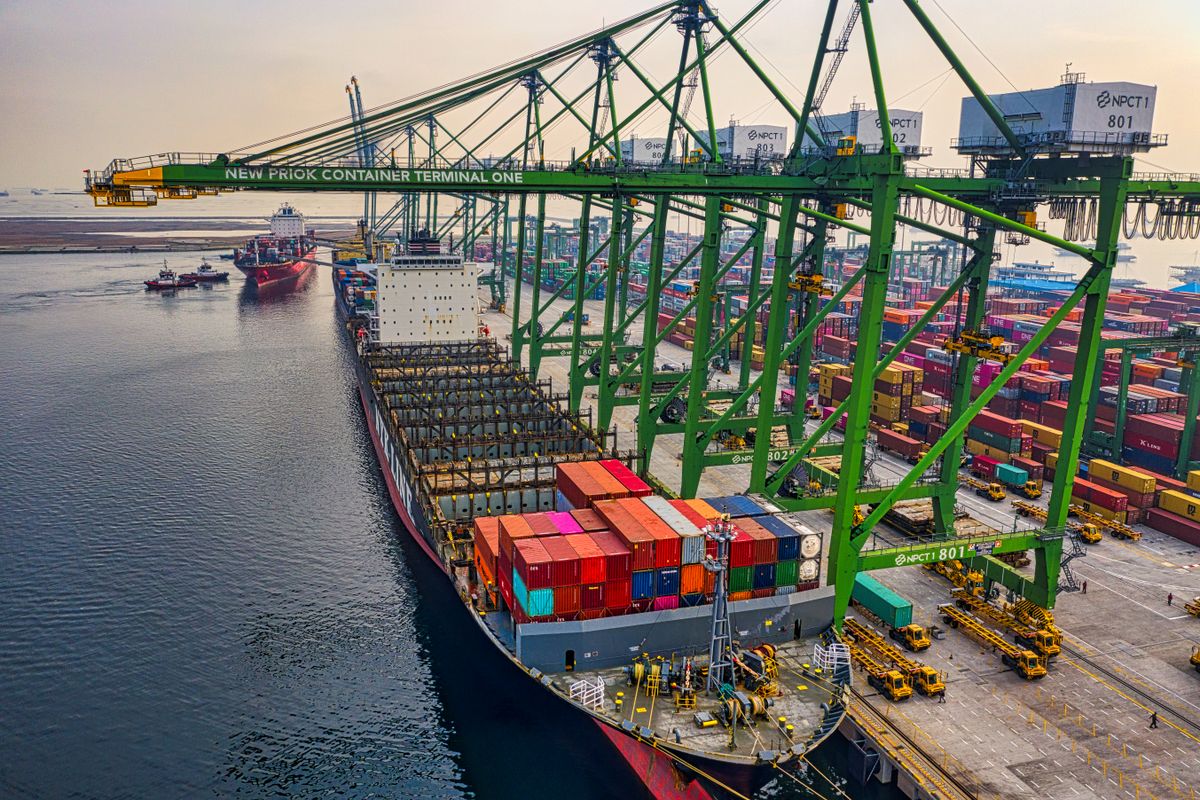
Image license: all three photographs are available under the Pexels License, which permits commercial use. They illustrate logistics activities and do not depict TONCENT facilities or imply endorsement.
Cover photo: Tom Fisk / Pexels, photographed in Jakarta.
Written by
Elena
Contributor at GFWE -- Global Freight World E-Alliance