For a shipment from China to Kenya, the ocean voyage is only part of the plan. Importers must choose a suitable shipping method, prepare documents before loading, arrange customs clearance and decide how the goods will reach the final address. A useful freight quotation should cover that complete journey—not simply the vessel’s arrival at Mombasa.
What Goods Move Through Kenya’s Logistics Network?
Kenya imports substantial volumes of fuel, machinery and other industrial goods, while many of its exports are agricultural products. According to the Kenya National Bureau of Statistics’ 2026 Economic Survey, the country’s leading imports by value in 2025 included petroleum products, industrial machinery, fats and oils, iron and steel, and motor vehicles. Leading exports included tea, cut flowers, vegetables and fruits, apparel, and unroasted coffee.
China was an important source of Kenyan imports, with imports from China valued at KSh 671.2 billion in 2025. That figure describes total imports from China; it does not mean every product listed above came from China.
Different goods need different transport plans. Machinery may require careful handling and site delivery. Fresh produce depends on temperature control and tight schedules. General merchandise may move as a full container or as part of a consolidated shipment.
Which Kenyan Port Handles the Cargo?
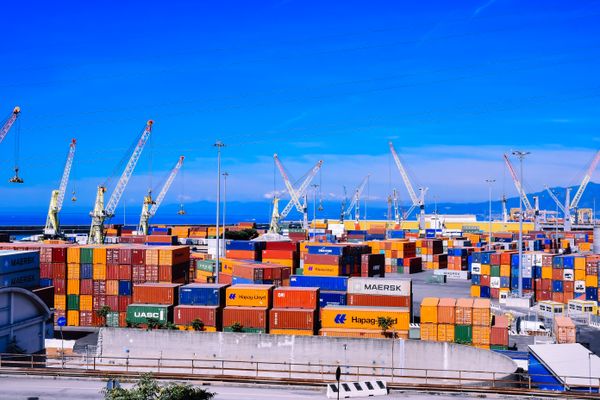
Mombasa is the principal sea gateway for many shipments to Kenya and cargo moving farther into East Africa. The Kenya Ports Authority reported that the port handled 45.45 million metric tons of cargo and 2.11 million TEUs in 2025. These are annual port-wide figures, not the capacity available for an individual booking.
Lamu is another Kenyan seaport. Before booking, confirm the named discharge port, the vessel’s current rotation and the onward cost from that port to the actual delivery address.
How Does Sea Freight Travel from China to Kenya?
Cargo from eastern China may be loaded through Shanghai or Ningbo; cargo from southern China may use Nansha. The available route depends on the supplier’s location, the carrier and the sailing selected.
As one example, CMA CGM’s Kilima Xpress service page shows Mombasa at approximately 27 days from Shanghai, 26 days from Ningbo and 22 days from Nansha on its published port rotation.
| Chinese loading port | Published example to Mombasa |
|---|---|
| Shanghai | About 27 days |
| Ningbo | About 26 days |
| Nansha | About 22 days |
These are port-to-port schedule examples for one service, not guaranteed door-to-door delivery times. Supplier pickup, export handling, possible consolidation, Kenyan clearance and inland delivery must be planned separately. Request the actual vessel schedule and cargo cut-off before setting an arrival deadline.
Should You Choose FCL, LCL or Air Freight?
FCL (full container load) gives one shipper use of a container. It is worth comparing when the shipment is large enough or keeping the cargo together is important.
LCL (less than container load) combines smaller shipments. Ask where consolidation and deconsolidation take place, which handling charges apply and how your goods will be identified in the shipping and customs documents.
Air freight may suit smaller, urgent or higher-value cargo. A flight schedule alone is not a door-to-door estimate: pickup, airline acceptance, customs procedures and local delivery still need to be included. Request a shipment-specific air quote rather than applying one transit time to every Chinese origin and Kenyan destination.
What Must Be Done Before a Container Is Loaded for Kenya?
Kenya introduced an Advance Cargo Declaration (ACD) process for containerised cargo destined for its ports. Under the Kenya Revenue Authority’s notice, the platform’s implementation began on 3 August 2026. Exporters shipping applicable cargo must obtain an ACD reference code at the loading point before the container proceeds to a Kenyan port.
The notice lists four documents for the application:
- Draft bill of lading
- Commercial invoice
- Freight invoice
- Export declaration
The ACD reference code must then be endorsed on the bill of lading. This is a pre-loading step, not a document to arrange only after the vessel reaches Mombasa.
For an FCL booking, ask the forwarder who will submit the application and when the code must be ready. For LCL cargo, ask the consolidator how the ACD process and the individual shipment’s documents will be handled. The cited notice addresses containerised cargo destined for Kenyan ports; do not assume the same process applies to air freight.
What Happens After the Vessel Reaches Mombasa?
After arrival, the cargo must pass the applicable port and customs processes before it can be released. The importer and clearing agent should have the commercial invoice, packing list, transport document and any required product-specific permits or conformity documents ready. They should also confirm current origin-document requirements for the goods.
For a Nairobi-bound container, the onward plan may involve road haulage or rail movement to an inland container depot, followed by delivery to the consignee. Kenya Ports Authority identifies its Nairobi inland container depot as linked to Mombasa by rail.
A warehouse in Nairobi, another Kenyan destination and a transit shipment for a neighbouring country will have different inland arrangements. Confirm the delivery address, handover point and responsibility for unloading.
How Should You Compare Freight Quotations?
Give each forwarder the same product description, quantity, carton or pallet count, gross weight, dimensions, Chinese collection address, cargo-ready date and complete Kenyan delivery address.
Then compare the written scope line by line. Does the price include origin collection, international freight, destination handling, customs-clearance service, duties and taxes, inland transport and final delivery? Who arranges the ACD reference code for an applicable container shipment?
A quotation ending at Mombasa cannot be compared directly with one delivering to the buyer’s warehouse. Ask the forwarder to identify every handover and every charge that remains outside the price before the goods leave the supplier.
Written by
Elena
Contributor at GFWE -- Global Freight World E-Alliance