
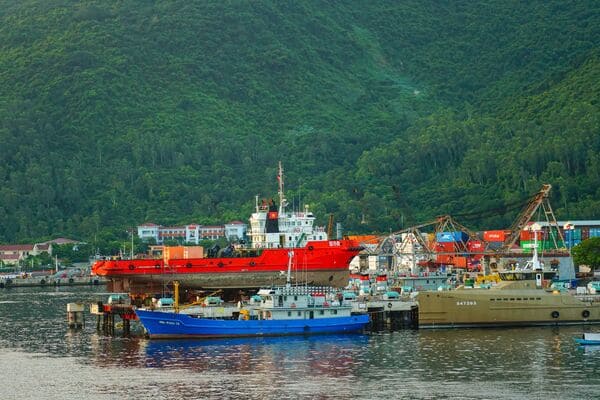
China and Vietnam are close neighbours, but a short distance does not mean every shipment reaches its final address quickly. Sea freight, cross-border trucking and air freight suit different cargo. The entry point, import documents and delivery address also affect the route and the total quotation. This guide follows a shipment from a supplier in China to its consignee in Vietnam.
What Drives Vietnam’s Trade and Logistics Demand?
Vietnam is both a major manufacturing exporter and an importer of production inputs. According to the National Statistics Office of Vietnam’s full-year 2025 figures, goods exports reached US$475.04 billion and imports reached US$455.01 billion. Manufactured products accounted for 88.7% of exports, while capital goods accounted for 93.6% of imports. China was Vietnam’s largest source of imports, supplying approximately US$186 billion in goods that year.
Electronics, computers and components, machinery, and production materials are important to this trade. These figures do not replace a shipment-specific product check, however. Goods described broadly as “electronic parts” may face different classifications and requirements depending on their materials, functions and models.
Should Cargo Enter Through Northern or Southern Vietnam?
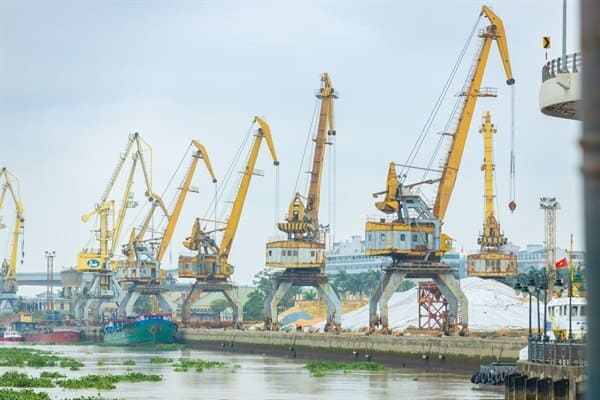
Start with the consignee’s address, then compare entry points. Hai Phong and its deep-water port area are important gateways for northern Vietnam and are relevant to deliveries around Hanoi and nearby industrial zones. For southern destinations, compare the actual carrier calls and inland arrangements through the Cai Mep–Thi Vai port cluster and container terminals serving the Ho Chi Minh City area.
Port size indicates a gateway’s importance, but it does not predict how quickly an individual shipment will be delivered. Figures reported by the Hai Phong maritime authority show that the city’s port system handled approximately 8.35 million TEU in 2025. That is annual throughput for the port system, not the volume of one terminal, forwarder or China–Vietnam service.
For cargo destined for Hanoi, an arrival at Hai Phong still needs import clearance and onward transport. For deliveries to Ho Chi Minh City, Binh Duong or Dong Nai, confirm the discharge terminal, cargo collection point and final-mile arrangement. A quotation marked only “to a Vietnam port” may not include delivery to the factory or warehouse.
How Do Sea Freight, Cross-Border Trucking and Air Freight Compare?
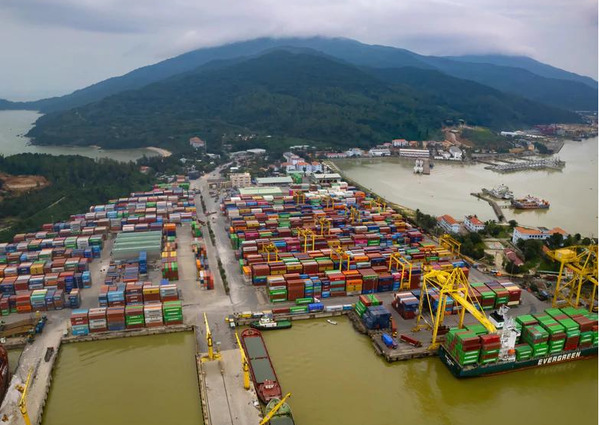
For sea freight, identify the supplier’s location, available Chinese loading ports, the carrier service and the Vietnamese discharge port. As one example, the Maersk NV2 service’s published rotation shows approximately seven days from Ningbo to Hai Phong and five days from Shanghai to Hai Phong.
| Loading port | Discharge port | Carrier’s published port-to-port example |
|---|---|---|
| Ningbo | Hai Phong | About 7 days |
| Shanghai | Hai Phong | About 5 days |
These are port-to-port examples for one service, not promises of delivery from a Chinese factory to a Vietnamese consignee. Supplier collection, waiting for the sailing, export handling, Vietnamese customs and final delivery are additional steps. Check the current sailing before booking.
Cross-border trucking is another option to quote for suitable cargo moving from southern China to northern Vietnam. Vietnam’s logistics authorities have described a permitted Nanning–Huu Nghi border–Hanoi road route. The actual movement depends on vehicle permits, border operations, cargo type and customs procedures on both sides. Road transport does not remove the need for customs clearance.
Air freight can suit smaller or more urgent cargo. Ask for the Chinese departure airport, Vietnamese arrival airport, any transfer point and the chargeable weight. An airport-to-airport schedule is not a door-to-door delivery estimate.
What Should You Compare in LCL, FCL and Trucking Quotes?
For larger shipments, compare full-container-load (FCL) sea freight with a suitable cross-border truck option. For smaller consignments, ask about less-than-container-load (LCL) sea freight or shared trucking. The international freight rate alone is not enough to choose:
- FCL: Confirm the container type, loading location, discharge port, free time and empty-container return.
- LCL: Identify the consolidation warehouse in China, the deconsolidation point in Vietnam and handling charges at both ends.
- Cross-border trucking: Confirm the border crossing, vehicle or transloading arrangement, customs responsibilities and delivery scope.
- Air freight: Compare actual and volumetric weight, airport handling and final delivery charges.
Give every forwarder the same cargo details, destination address and requested service scope so their quotations can be compared fairly.
What Happens After the Goods Arrive in Vietnam?
Vietnam’s Trade Portal describes electronic import declarations and common supporting documents, including a commercial invoice, bill of lading or air waybill, packing list and, where applicable, proof of origin or an import permit. The Vietnamese importer or its customs representative should confirm the precise requirements for the goods.
The complete chain is: supplier collection in China → Chinese loading port, airport or border crossing → international or cross-border transport → Vietnamese port, airport or border crossing → import declaration and release → inland transport → final delivery address.
If delivery is included, the quotation should state who arranges the receiving appointment and unloading, and how storage or waiting charges will be handled if the cargo cannot be released or received as planned.
What Information Should You Prepare Before Requesting a Quote?
Send the forwarder the following information and ask it to state what is included and excluded:
- Accurate product descriptions, intended use, quantities and declared values
- Package count, dimensions, gross weight and any special-cargo details
- Supplier pickup address in China and cargo-ready date
- Vietnamese importer details, full delivery address and receiving contact
- Preferred transport mode and target delivery date
- The required scope of customs handling, tax payment, storage and final delivery
For a China–Vietnam shipment, the most useful quotation is not an isolated price per kilogram or cubic metre. It is a plan that names the entry point, transport mode, customs responsibilities and final delivery boundary. Confirm those points before comparing rates and transit estimates.
Sources Reviewed
- National Statistics Office of Vietnam, Socio-economic Situation in the Fourth Quarter and 2025
- Hai Phong maritime authority, 2025 port and container throughput figures
- Maersk, NV2 Intra-Asia Service Rotation
- Vietnam Trade Portal, Import Declaration Guidance
- Vietnam logistics authorities, China–Vietnam cross-border road transport information
Information reviewed on 2 November 2026. Sailing schedules, border operations and product requirements can change; confirm them again before dispatch.
Written by
Elena
Contributor at GFWE -- Global Freight World E-Alliance
