The five minutes you spend vetting a partner can save you five months of chasing a bad debt.
Before you trust someone with your cargo and your clients, you need to do your homework. Here's a practical due-diligence checklist every forwarder should run.[^1]
1. Verify they actually exist (properly)
Start with the basics:
- Confirm business registration and licenses
- Check the physical address — is it real?
- Look for a professional website and consistent online presence
A legitimate company leaves a legitimate footprint.[^2]
2. Check financial health
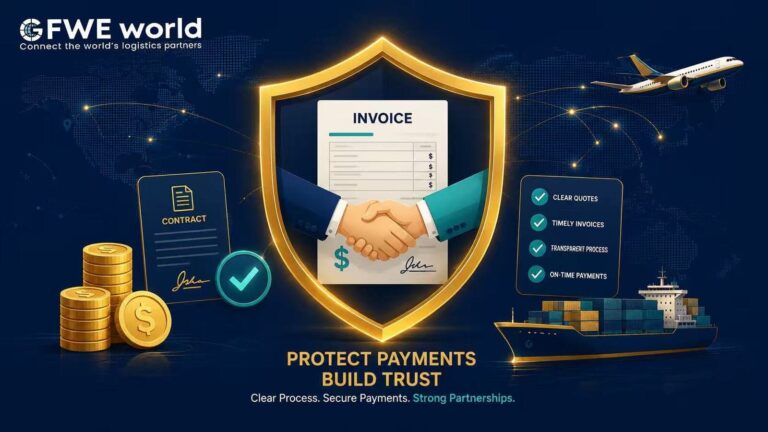
This protects your money:
- Ask for trade or bank references
- Look for signs of financial stability
- Search for any public records of payment disputes or complaints[^3]
3. Assess their experience
Make sure they can actually handle your needs:
- Do they have experience in your specific lanes and cargo types?
- How long have they been operating?
- Can they provide references from current partners?[^4]
4. Test their communication
Before signing anything, notice:
- How quickly do they respond?
- Are their answers clear and professional?
- Do they dodge tough questions?
How they communicate now is how they'll communicate during a crisis.[^5]
5. Start with a trial
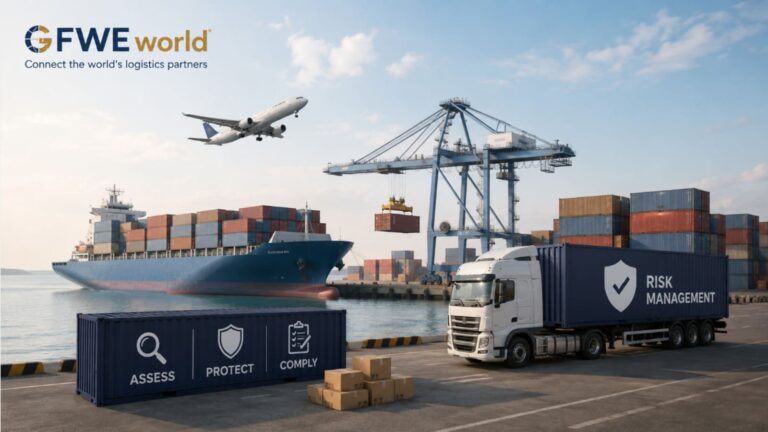
Don't bet everything on day one. Begin with a smaller, lower-risk shipment to see how they perform before scaling up — a simple way to practice risk management.[^6]
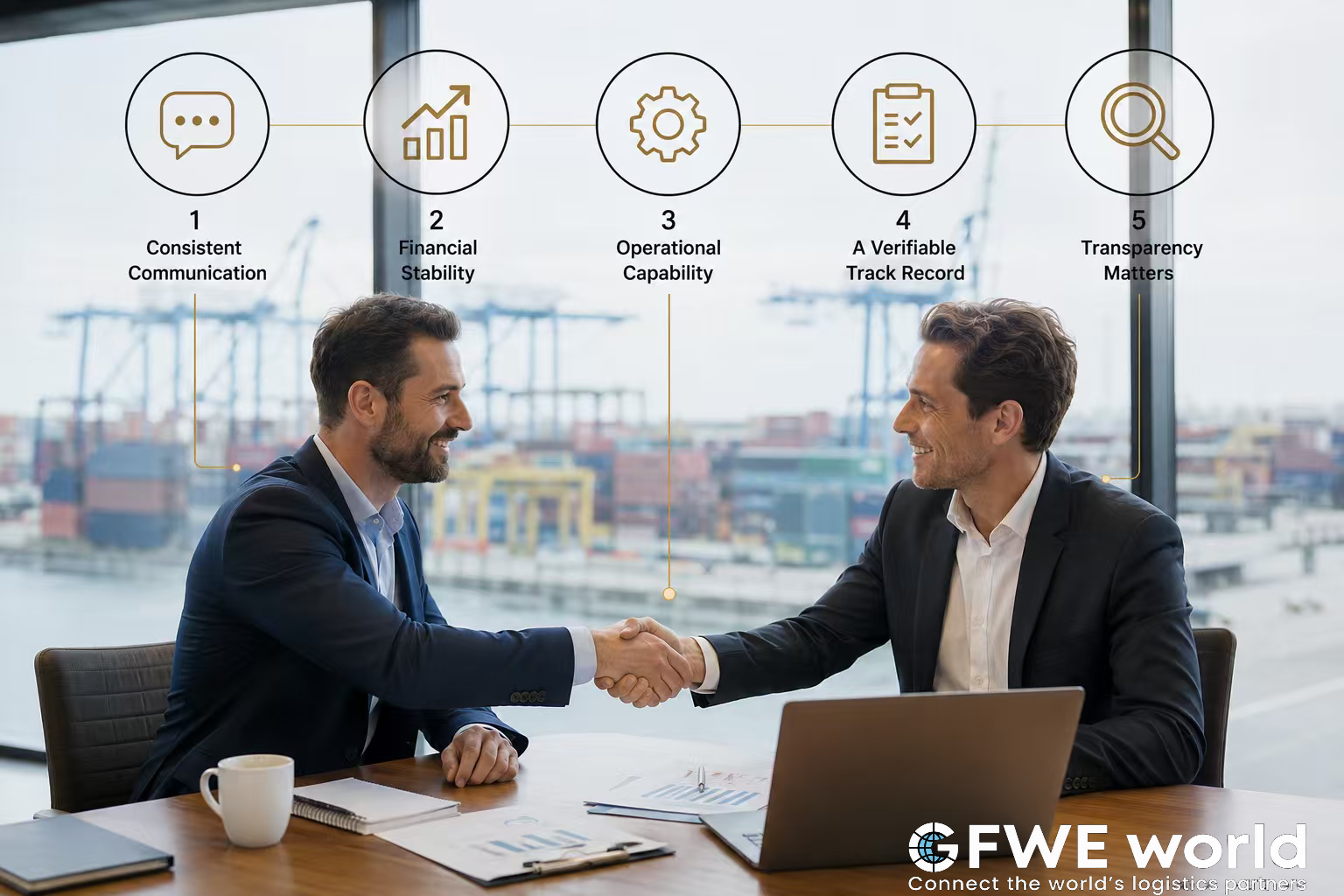
The problem with DIY vetting
Proper vetting takes time, resources, and access to information that's often hard to get — especially for overseas partners. Many forwarders simply can't verify everything, so they take a gamble against unavoidable information asymmetry.[^7]
This is the entire reason verified networks like GFWE exist. Every member is pre-vetted for legitimacy, financial standing, and professional reputation — so much of this due diligence is already done for you. You start from a foundation of trust, not uncertainty.
Vetting isn't paranoia. It's protection. Do it every time — or partner where it's already done for you.
👉 Skip the guesswork. Connect with pre-vetted forwarders on GFWE.
[^1]: Due diligence — the investigation and verification of a party's background before entering an agreement — Wikipedia: https://en.wikipedia.org/wiki/Due_diligence [^2]: Business license — official registration and permits that confirm a company legally exists — Wikipedia: https://en.wikipedia.org/wiki/Business_license [^3]: Credit risk — the risk that a counterparty fails to meet its financial obligations; assessed via trade and bank references — Wikipedia: https://en.wikipedia.org/wiki/Credit_risk [^4]: Reputation — the beliefs and opinions held about an entity, verifiable through references and track record — Wikipedia: https://en.wikipedia.org/wiki/Reputation [^5]: Business communication — the sharing of information within and outside an organization; a strong predictor of crisis-time reliability — Wikipedia: https://en.wikipedia.org/wiki/Business_communication [^6]: Risk management — identifying and minimizing risk, e.g. by starting with a small trial shipment — Wikipedia: https://en.wikipedia.org/wiki/Risk_management [^7]: Information asymmetry — when one party lacks the information needed to properly assess another — Wikipedia: https://en.wikipedia.org/wiki/Information_asymmetry
Written by
Elena
Contributor at GFWE -- Global Freight World E-Alliance