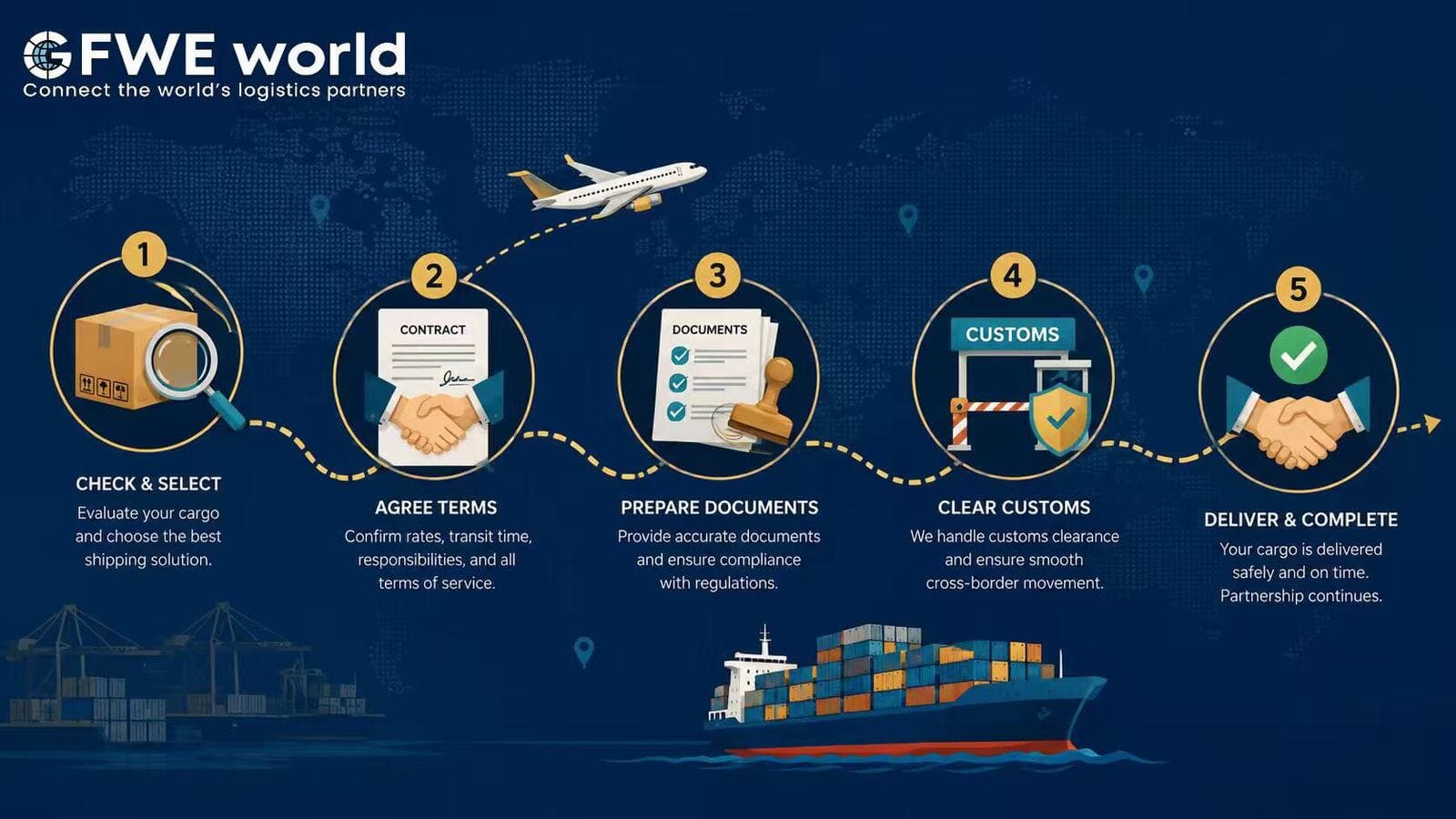
Your first international shipment feels like defusing a bomb — one wrong wire and everything blows up. Take a breath. It's more manageable than it looks.
Every seasoned forwarder was once terrified of their first cross-border move. Here's a clear roadmap to get it right.
1. Understand the shipment inside out
Before anything else, nail down the details:
- What is being shipped (commodity, value, weight, dimensions)?[^1]
- Where is it going, door to door?
- What terms apply (Incoterms define who's responsible for what)?[^2]
Confusion here causes 90% of first-timer disasters. Get clarity before you quote.
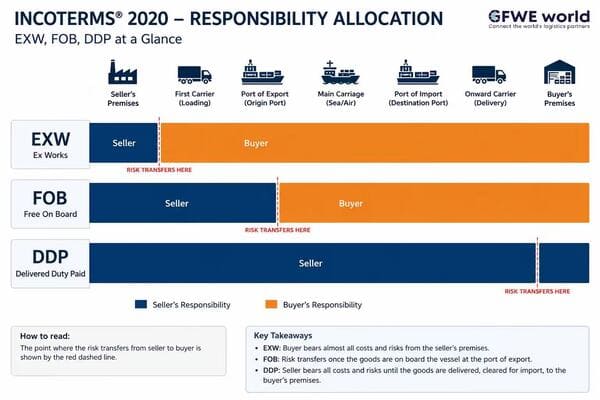
2. Master the Incoterms
Incoterms decide who pays and who's liable at each stage. Mixing up EXW, FOB, and DDP can cost thousands and create ugly disputes. Know exactly where your responsibility begins and ends.[^3]
3. Get the documentation right
International shipping runs on paperwork:
- Commercial invoice[^4]
- Packing list[^5]
- Bill of Lading / Air Waybill[^6]
- Certificates of origin or compliance (where needed)[^7]
One missing or incorrect document can freeze your cargo at customs.
4. Plan for customs — both sides
Customs clearance is where shipments stall. Understand duties, taxes, and regulations at both origin and destination. When in doubt, lean on a knowledgeable local partner.[^8]
5. Choose a reliable destination partner
This is the make-or-break factor. A strong local agent handles clearance, delivery, and problems on the ground — turning a potential nightmare into a smooth handoff.
The safety net that changes everything
Here's what calms first-timer nerves fastest: a trusted partner on the other end. When you're new to a lane, having a verified, competent agent means you're never navigating unfamiliar territory alone.
That's precisely why forwarders lean on networks like GFWE. Instead of gambling on a stranger for your critical first shipment, you connect with a pre-vetted local expert who's got your back — so your debut goes smoothly, not sideways.
Your first shipment doesn't have to be scary. With the right partner, it's just the first of many.
👉 Handle every shipment with confidence. Find your trusted local partner on GFWE.
[^1]: Cargo — goods carried by ship, aircraft, or vehicle; the commodity's nature, value, and dimensions drive every decision — Wikipedia: https://en.wikipedia.org/wiki/Cargo [^2]: Incoterms — internationally recognized commercial terms published by the ICC, defining buyer and seller responsibilities — Wikipedia: https://en.wikipedia.org/wiki/Incoterms [^3]: EXW (Ex Works), FOB (Free on Board), and DDP (Delivered Duty Paid) are specific Incoterms allocating cost and liability at different points — Wikipedia: https://en.wikipedia.org/wiki/Incoterms [^4]: Commercial invoice — a customs document identifying the goods, value, and parties in a transaction — Wikipedia: https://en.wikipedia.org/wiki/Commercial_invoice [^5]: Packing list — a shipping document itemizing the contents, weight, and dimensions of each package — Wikipedia: https://en.wikipedia.org/wiki/Packing_list [^6]: Bill of Lading / Air Waybill — transport documents serving as a receipt of goods and contract of carriage — Wikipedia: https://en.wikipedia.org/wiki/Bill_of_lading [^7]: Certificate of origin — a document certifying the country in which goods were manufactured, often required for customs and tariffs — Wikipedia: https://en.wikipedia.org/wiki/Certificate_of_origin [^8]: Customs — the authority responsible for controlling the flow of goods and collecting duties and taxes at borders — Wikipedia: https://en.wikipedia.org/wiki/Customs
Written by
Elena
Contributor at GFWE -- Global Freight World E-Alliance